ATRIUM 04
The new rules of engagement
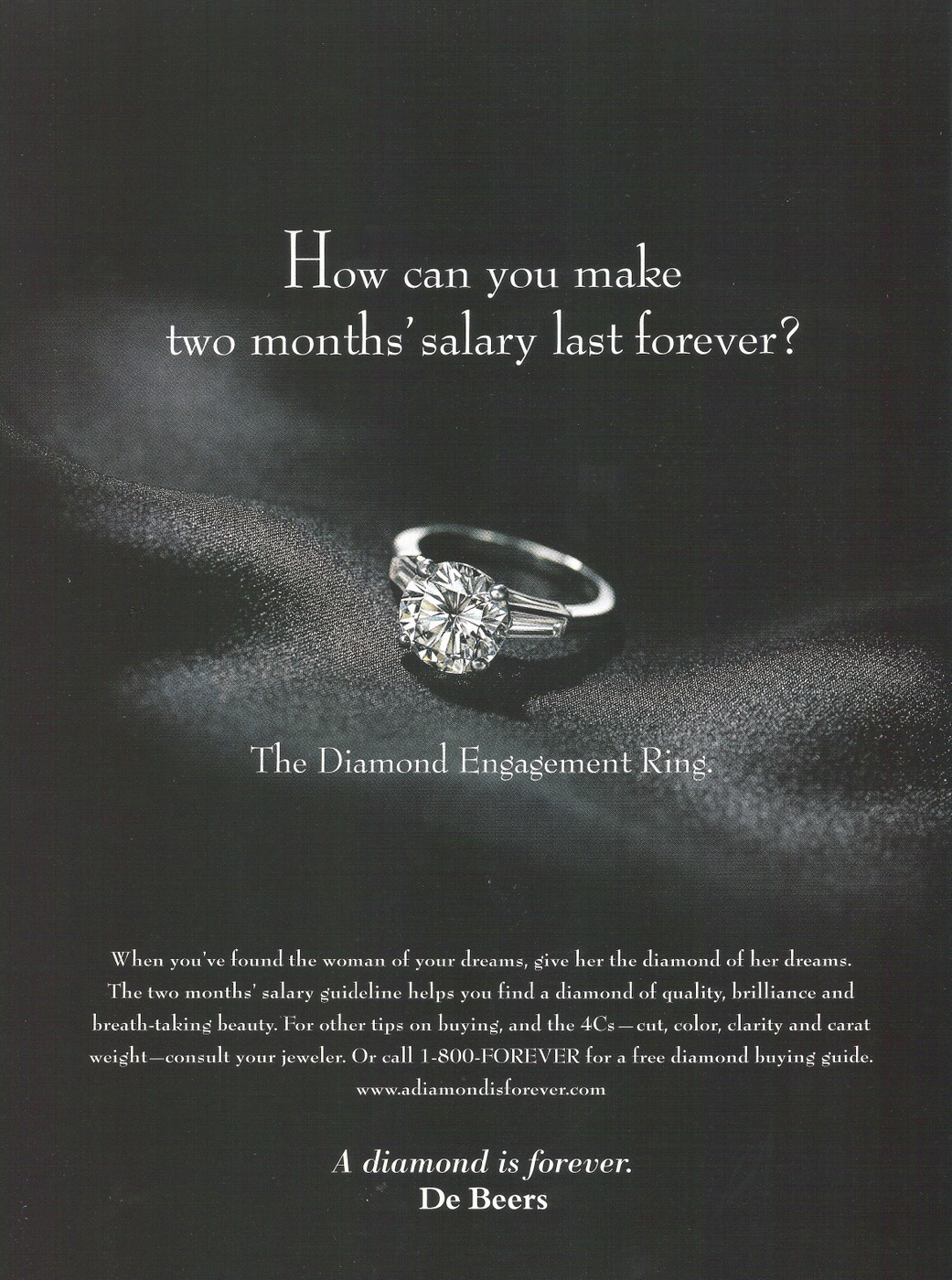
In the late 1930s, having seen sales plummet during the Great Depression, De Beers began one of the most powerful marketing campaigns of the modern era. Reinforced with the strapline ‘A diamond is forever’ in 1947, it transformed cultural expectations. Before the campaign, few engagements were celebrated with a diamond ring; by the end of the twentieth century a diamond had become the norm.
Embedded within the marketing strategy was a new myth: that you should spend a month’s salary on the ring. Despite inflation, this ratio has set a pricing tradition that is inextricably linked to the perceived value of the ring (and its owner), positioning the diamond ring as a must-have token of love, status, memory and meaning.
In contrast, budgeting for a building project is – for most people – an exercise devoid of aesthetic and social considerations. The ‘tradition’ in assessing how much to spend on a private residential project is summarised by the equation:
x – y = b
(where x is the maximum property value on the street, y is the purchase cost and b is the budget)
If you applied this to the engagement ring, the budget would be so small a diamond would be completely out of the question.
Leaving aside the growing disconnect between building costs and inflation, this linear approach to budgeting does have some logic to it, but there are many hidden factors – let’s call them z – that are not reflected in this simplistic approach. Many urban properties are now over a hundred years old and at the end of their normal service life. They don’t meet current Building Regulations, don’t fit and flow well for modern life, and are inadequate in the face of climate change. So perhaps a more accurate equation is:
x – y + z = b
(where z is improved lifestyle, compliance with current building standards, reduced energy costs, increased thermal comfort, and the repair and replacement of defective construction)
The cost of z can be quantified for most of the factors above. Clearly improving the insulation in your home will reduce the energy bills, addressing one of the most basic human needs, but – as in Maslow’s hierarchy – it’s tackling the more esoteric ‘social’ and ‘self-actualisation’ goals that will yield the most reward.
An example of this might be more invasive building work that carves out a larger dining room in a home, or an atrium in an office building. These architectural features may not match the Minimum Viable Product for the site, but they create spaces that speak to those esoteric needs by providing a sense of belonging and kinship, a shared identity or a creative environment.
Don’t be alarmed if you are the first person on your street to work to this new equation. Just as the overall value of a diamond ring not only equates to the cost of the stone and setting but also its implied status, memory and meaning, so the value of your building project comes to far more than the cost of its raw materials. And at some point, everyone on the street will have to tackle the z quality if they are to renew their building to fit and flow for the future.