ATRIUM 03
Symphony by a Londoner
Think of any English period drama on film or TV and it’s almost guaranteed that Ralph Vaughan Williams will appear on the soundtrack. With The Lark Ascending, he provided a musical motif that will forever be associated with birdsong, rolling hills and endless rural summers. But although it might suit the needs of the visual arts, this view of Vaughan Williams’ work is superficial. He often said that his work had no meaning, but it’s important to remember it was composed across two world wars, and that he’d experienced the horror first hand during his time in the Royal Army Medical Corps. Vaughan Williams saw himself as a Londoner, and a socialist. His symphonies are equally uplifting or tragic depending on the listener. They may have no meaning but they’re loaded with context.
Understanding this misappropriation of the arts is important, not least in architecture. Planning policy, for example, is meant to support sustainable development and high-quality design but often becomes a constraint. Due to the volume and diverse nature of projects to be reviewed, it’s understandable that planners resort to blunt tools in the same way that musical directors cherry-pick from Vaughan Williams’ back catalogue. Guidance, for example, that materials “must be of a similar appearance to those used in the construction of the exterior of the existing” creates a superficiality in our architecture, keeping it firmly within a generally unremarkable Victorian or early twentieth-century vernacular.
There are examples, though, where art and context are perfectly matched. Vaughan Williams’ Fantasia on a Theme by Thomas Tallis grows out of a song by a sixteenth-century royal musician and composer. The music is used to great effect in Industry, a BBC drama series about the world of high finance, backing a tense scene that lifts the veil on those with true power – and those to be sacrificed. It evokes Englishness but has deeper meaning because of the context of the action behind which it is heard.
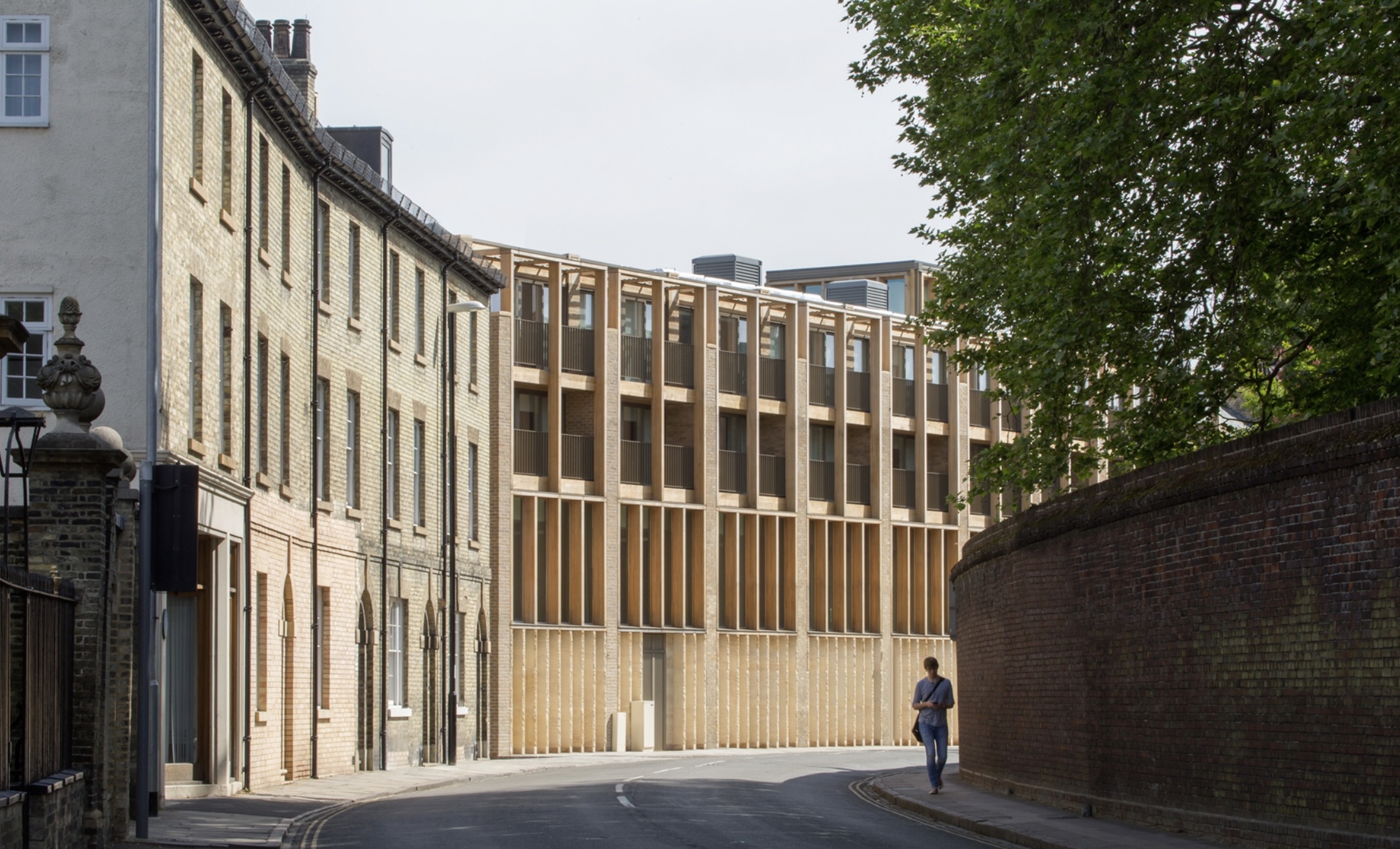
Similarly, architecture is at its best when it responds to the context in every sense. Niall McLaughlin’s West Court at Jesus College, Cambridge, Nithurst Farm by Adam Richards and The Royal Courts of Guernsey by Nicholas Hare are all great examples of architecture that on one level is highly respectful of context (and employs ‘materials of similar appearance to the existing’), but also deftly manages modern challenges around embodied energy and climate change.
Architects are now designing in the context of hotter summers, intense rainfall and the demands of increased multi-generational living in the same way that Vaughan Williams composed against the backdrop of social injustice and war. Like his work, excellent contextual architecture is like a tiger in the grass. Look fleetingly and you’ll miss it; see it and you’ll find a masterpiece of subtlety, rich in layers of meaning that the architect may never have even contemplated.